Microcement: The Seamless Solution for Modern Interiors
- Teodora Savcheva
- Sep 10, 2025
- 5 min read

Updated: Sep 11, 2025

What is microcement? Micro cement is a decorative finish that brings together strength, style, and versatility. Just a few millimetres thick, it can be applied directly over existing surfaces, making it a smart way to achieve a seamless, contemporary look without major renovation work. Once sealed, it’s highly resistant to water and wear, which is why it’s become such a popular choice for modern bathrooms, kitchens, and open-plan living spaces.
What are microcement's components?
Cement
Usually Portland cement, which acts as the main binder, giving microcement its hardness and compressive strength.
Polymers
These improve flexibility and adhesion. Depending on their type, polymers can behave differently: some can be reshaped with heat (like those used in plastic bottles), some set permanently (like epoxy resins), and others remain elastic (like silicone).
Ultra-fine aggregates
Very finely ground materials such as sand, quartz, or recycled stone that add body, strength, and durability to the mix.
Additives
Special ingredients that adjust performance, for example, plasticisers to improve workability, accelerators to speed up setting, or waterproofing agents for extra protection.
Colour pigments
High-quality, alkali-resistant pigments that ensure long-lasting, stable colour without fading over time.
Sealers & protective coats
Applied after installation, usually polyurethane or epoxy finishes that guard the surface against stains, scratches, and moisture, ensuring durability.

Applications of microcement and why is it such a versatile choice? Micro cement is a high-performance coating applied in ultra-thin layers of just 2–3mm. This makes it much lighter and more cost-efficient than conventional concrete, while still delivering impressive strength and durability. Its minimal thickness, combined with excellent thermal conductivity, also makes it a perfect match for underfloor heating systems.
One of microcement’s biggest advantages is its versatility. Thanks to its fine composition and strong adhesion, it can be applied to a wide variety of surfaces — both horizontal and vertical. From walls, floors, and staircases to countertops, bespoke furniture, terraces, and even facades, it offers endless design possibilities with a seamless, contemporary finish.
Because it is naturally waterproof once sealed, microcement is an excellent choice for wet areas such as bathrooms, shower enclosures, and poolside spaces. For added safety in areas with frequent water exposure or high foot traffic, slip-resistant finishes or protective sealers can be applied.
In hygiene-sensitive environments, such as spas, beauty salons, or wellness centres, microcement really stands out. Its smooth, joint-free surface prevents dirt from building up, and its low porosity makes cleaning effortless — resulting in a durable, stylish, and exceptionally sanitary solution.





Durability Unlike rigid materials such as tiles, microcement offers a degree of elasticity, allowing it to accommodate minor substrate movements without immediate damage. This flexibility helps minimise the risk of cracks in everyday conditions. However, it is important to note that in cases of significant structural movement, the microcement surface may replicate underlying cracks. Suitable for residential and commercial interiors, its robust bonding properties ensure excellent adhesion to a wide range of surfaces, allowing it to perform reliably even in high-traffic environments such as retail spaces, offices, or busy family homes. Once sealed, it is highly resistant to aggressive cleaning agents, making maintenance straightforward and ultra-hygienic.
By nature, microcement is a porous material, but professional sealing transforms it into an impermeable finish, resistant to water, stains, and everyday wear. This protective barrier is key to its durability, particularly in moisture-prone areas like bathrooms and kitchens.
While durable, microcement is not as hard as natural stone or porcelain tile. This means that sharp, heavy impacts—for example, dropping a heavy object—can cause chips or localised damage. The good news is that these damages can be addressed with repairs.
Minor scratches or surface marks
These can usually be lightly sanded and resealed, restoring the smooth finish without noticeable signs of repair.
Chips or localised damage
Small chips can be patched with a matching microcement mixture, carefully feathered into the surrounding surface. A professional application ensures the repair blends seamlessly.
Cracks from substrate movement
If a crack mirrors the underlying substrate, it can be filled and refinished, but significant structural cracks may need addressing at the base before cosmetic repair.
Sealing maintenance
After any repair, resealing the area is essential to restore full water and stain resistance.

Longevity
With proper application and sealing, microcement can last 15–20 years or more without requiring major intervention. To preserve its appearance and performance, it is recommended to reseal the surface every 3–5 years, depending on the level of foot traffic and use. This simple maintenance step refreshes the protective layer, ensuring the finish remains durable, stain-resistant, and visually striking over time.
Installation & Completion Timeframe
Rapid drying time adds to its appeal, allowing for functional surfaces within a day and lending projects a consistent, professional quality.

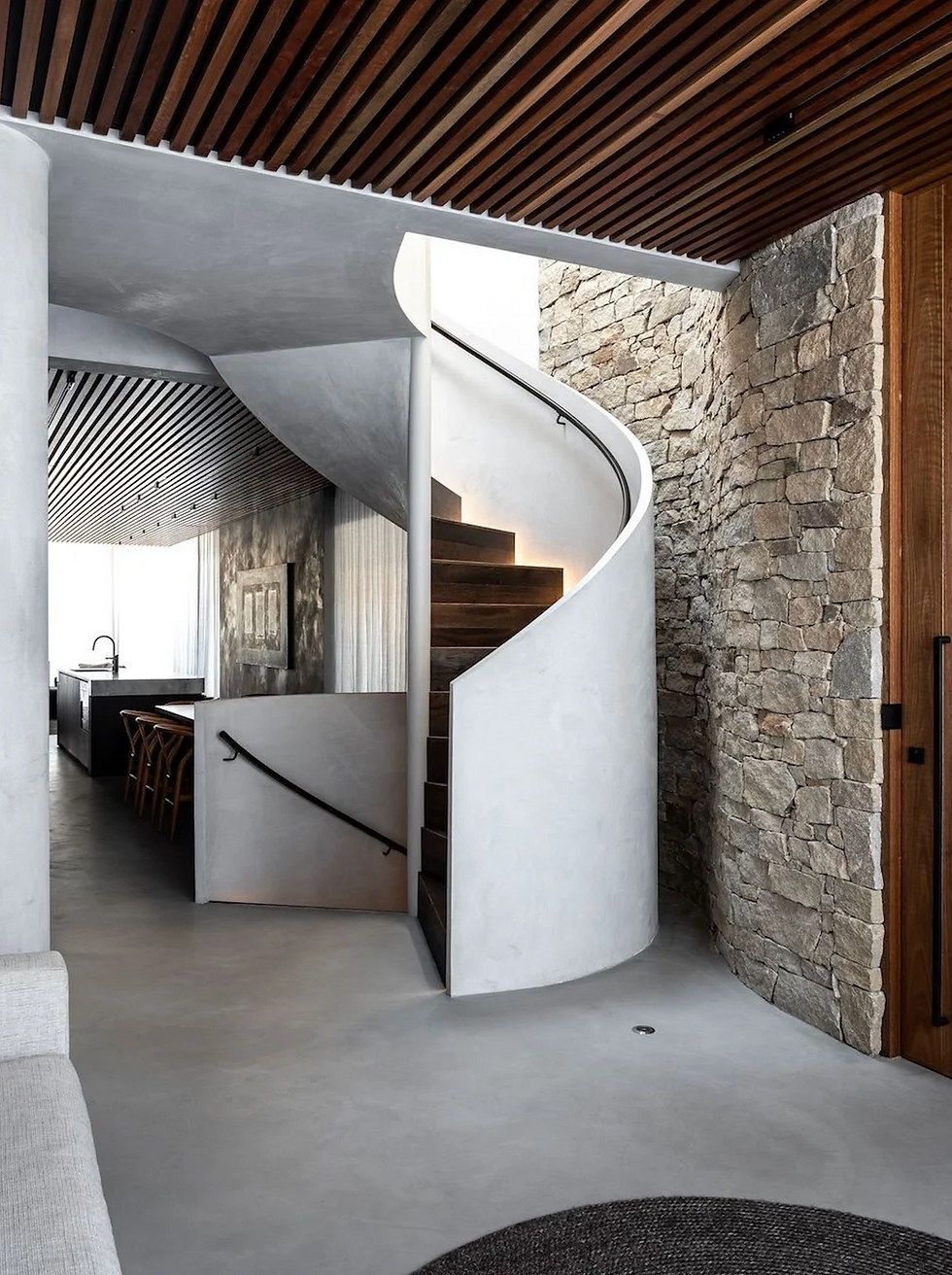
“Simplicity is the ultimate sophistication.” – Leonardo da Vinci
How microcement elevates your interior? Microcement offers tailored looks with no bounds. The final finish can range from sleek gloss or satin to matte, polished, or textured surfaces. Adding colour pigments allows for versatile effects, from uniform and mottled tones to metallic sheens or Venetian stucco finishes, enabling truly unique and personalised interiors.
This material is innovative; it's the contemporary evolution of polished concrete, a hallmark of brutalist and minimal aesthetics. Its seamless application creates continuous surfaces with no visual breaks, eliminating clutter and enhancing spatial flow. Beyond cold austerity, microcement provides a tranquil, tactile finish that introduces subtle warmth while maintaining a refined, minimalist aesthetic.
Depending on context, microcement can evoke the charm of traditional plasterwork, yet it consistently serves as a neutral, adaptable canvas, offering freedom for creative exploration in both colour and texture. Its serene, understated elegance ensures microcement remains timeless, complementing a wide range of interior styles.
When paired with premium finishes such as brass or matte black hardware, microcement interiors gain a sophisticated, elevated character. Introducing natural woods and tactile fabrics like bouclé adds warmth and modern refinement. While earthy palettes are a natural choice, bold colour accents can also be incorporated to make a statement and create a truly unique space.
Design tip for the current futuristic design trend: Consider integrating LED lighting seamlessly into architectural details to enhance depth and drama. Combine this with organic curves and biomorphic forms to soften geometry, evoke fluidity, and create interiors that feel both innovative and human-centred. The result is an immersive space that balances cutting-edge design with comfort, warmth, and sophistication.



Environmental Impact & Sustainability Microcement is increasingly recognised as a sustainable alternative to traditional finishes. Its thin-layer application uses far less material than polished concrete, lowering its carbon footprint compared to tiles, concrete, or stone cladding. It can also be applied directly over existing surfaces, reducing the need for demolition and minimising waste. Even when removed, micro cement produces minimal debris, making it a practical choice for eco-conscious renovations and new builds.
However, micro cement is not entirely without environmental considerations. Its composition typically includes fossil-based polymers, which limit its biodegradability and increase dependence on non-renewable resources.
While micro cement is generally safe, there are a few concerns worth noting, particularly regarding volatile organic compounds (VOCs). Standard microcement contains VOCs, which some homeowners prefer to avoid due to potential allergic reactions or long-term health considerations. Fortunately, water-based alternatives are now widely available, offering a VOC-free solution without compromising on the aesthetic and performance benefits of micro cement. Products like Topcret’s Baxab Eco are popular examples. These formulations take slightly longer to cure between coats compared to resin-based options, but they provide a safer, environmentally friendly alternative for residential interiors.
Cost Micro cement is typically considered a premium solution when it comes to pricing. The price would vary depending on the area, choice of finish, product quality and surface preparation. The entry-level service would be approximately £80 – £120 per m². More specialised finishes—like textured, high-gloss, or waterproof variants—can push prices up to £120–£160 per m².
Comments